

Netra Gowda is a global leader in AI, digital transformation, business strategy and organisational change. Her work addresses one of the defining challenges facing business leaders today: how to turn the potential of artificial intelligence into tangible business value while preparing people and organisations for fundamentally new ways of working.
As Vice President of HR Transformation, Digital & AI at Airbus, she works at the intersection of HR transformation, broader digital transformation and AI adoption. Her role encompasses developing workforce capabilities and driving the organisational changes needed to translate technological potential into practical business applications.
Netra Gowda brings extensive international experience across digital transformation, advanced analytics, AI, cloud technologies, strategy and innovation. Before returning to Airbus, she served as Vice President of Strategy, Planning and Portfolio at Stellantis. During her earlier roles at Airbus, including Airbus Defence and Space, she held several senior leadership positions, among them Head of Advanced Analytics, AI & Cloud Acceleration, Chief of Staff to the Digital Transformation Officer, and Head of Culture Change for Digital Transformation. Her professional experience also includes the technology sector, notably Intel.
An engineer by training, she holds an MBA from Germany. Her background combines technical expertise with corporate strategy and a deep understanding of the organisational changes required to adopt new technologies successfully. She is also a visiting lecturer at Sciences Po in Paris and a Millennium Leadership Fellow with the Atlantic Council.
Investment in AI matters when it solves real business problems and delivers measurable results. This requires identifying the right use cases, making informed investment decisions and aligning technology initiatives with the company’s strategic priorities. The key challenge for management is to move beyond isolated experiments and pilot projects towards applications that improve productivity, decision making and business performance.
AI is changing job responsibilities, roles and the skills employees need to succeed. Access to technology alone does not guarantee that people will use it effectively or that it will deliver the expected results. Skills development, employee engagement and new ways of working must therefore evolve alongside technological change. Success also depends on an organisation’s ability to learn, challenge established practices and build new capabilities.
Scaling AI across an entire organisation is far more complex than replicating a successful pilot project. It requires alignment across strategy, technology, business processes and accountability, as well as removing barriers between different parts of the organisation. Leaders must determine priorities, create the conditions for broader adoption and ensure that AI becomes part of how the business operates, rather than a collection of disconnected initiatives.
Netra Gowda’s session connects strategic decisions about AI with the challenges of implementing it across large organisations. For business leaders, the central question is how to ensure that investment in technology translates into tangible changes in the way work gets done, measurable business results and a clear return on investment.

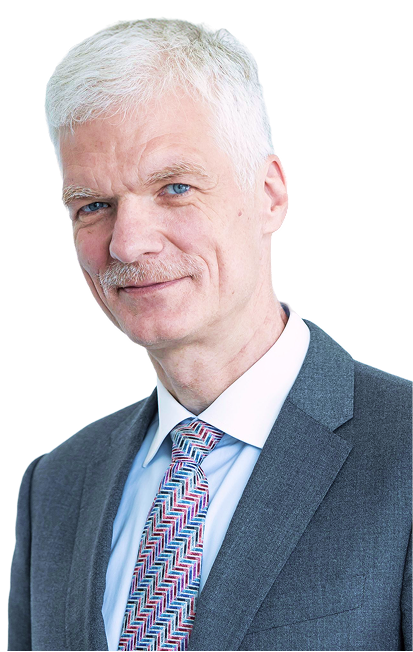
DIRECTOR FOR EDUCATION AND SKILLS, OECD
Initiator and Global Leader of PISA TEST
THE FUTURE OF WORK: WHEN EDUCATION BECOMES A BUSINESS PRIORITY
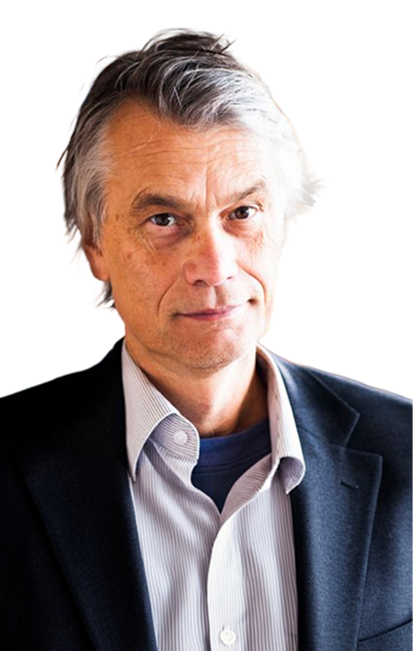
PROFESSOR OF ORGANISATION STUDIES, LUND UNIVERSITY, SWEDEN
AUTHOR OF RETURN TO JUDGEMENT AND ANTI STUPIDITY
ORGANISATIONAL SLUDGE & FUNCTIONAL STUPIDITY: ANTI STUPIDITY AS A KEY MANAGERIAL TASK

GrowthX Partner
HIGH GROWTH STRATEGY SPECIALIST
FROM RESET TO THRIVE: LEADING GROWTH AND PERFORMANCE THROUGH UNCERTAINTY

MANAGING DIRECTOR, NEXOID
CORPORATE GOVERNANCE & CULTURE RISK: DETECTING TOXIC BEHAVIOURS IN MODERN ORGANISATIONS
If you want to always be among the first to know everything about our events