

Strategy That Works When the Rules of the Game Change
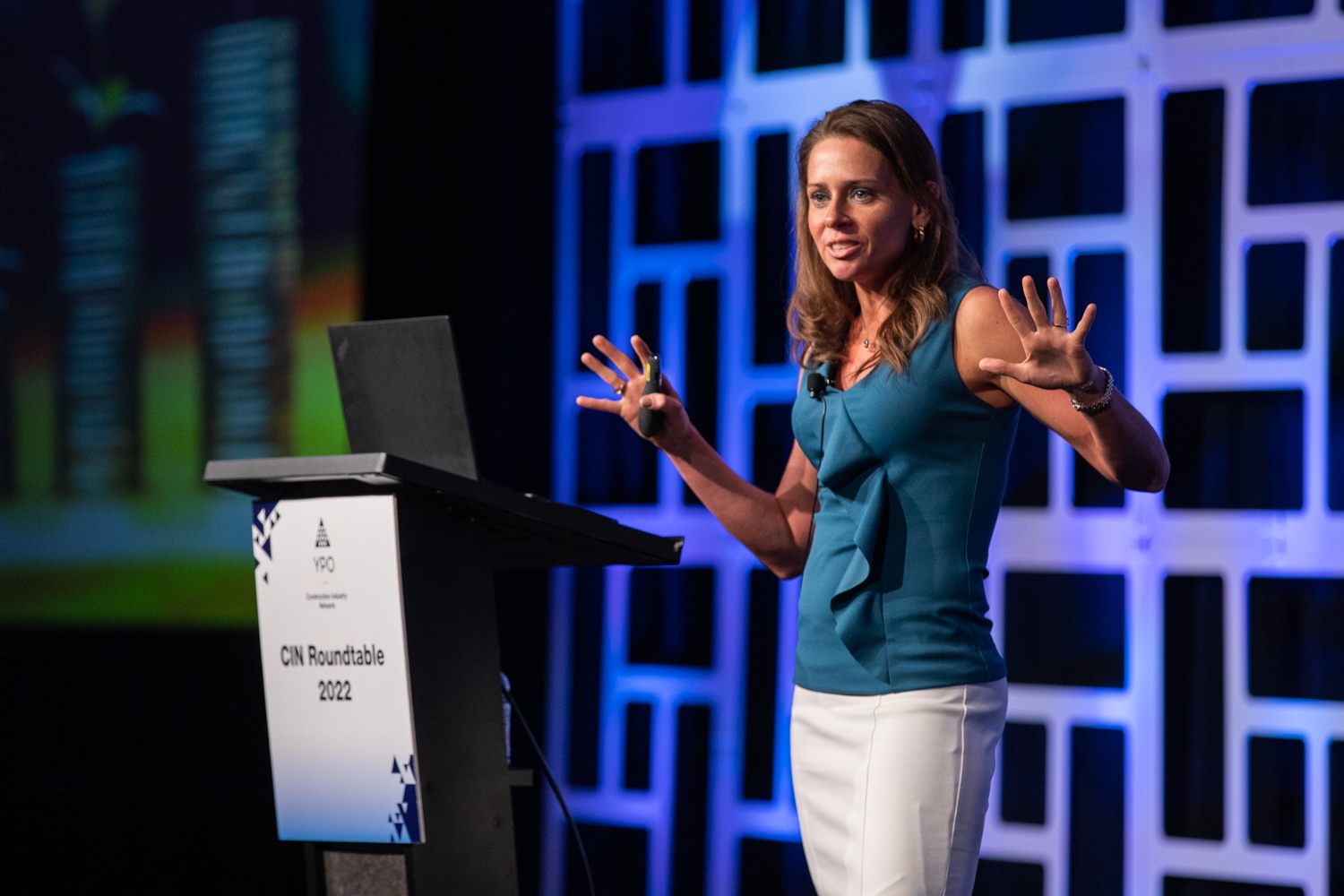
Dr. Rebecca Homkes, one of the world’s leading experts in growth strategy and business performance under uncertainty, addresses one of the defining questions of modern business: how can companies achieve growth and strong performance in uncertain conditions?
As an advisor to CEOs and executive teams, she helps organisations define growth strategies and create the conditions for successful execution — even when markets shift, the assumptions underpinning business decisions no longer hold, and the future cannot be reliably predicted.
Her expertise has direct and immediate implications for how CEOs lead their companies when markets change faster than organisations can anticipate. As coauthor of the influential Harvard Business Review article “Why Strategy Execution Unravels and What to Do About It”, she draws on empirical evidence to explain why between two thirds and three quarters of large organisations struggle to execute their strategies in practice — and how her SRT Loop methodology can help address these challenges.
Her impact on the global business community is reflected in the words of leaders who have worked with her. Toto Wolff, Team Principal & CEO of Mercedes – AMG PETRONAS F1 Team, highlights the value of her approach for teams that must perform and win amid constant market disruption. Steve Brass, President and CEO of WD40 Company, emphasises her work in helping leaders embrace uncertainty and build the resilience needed to keep executing their strategies as circumstances change.
As a faculty member at London Business School and Duke Corporate Executive Education, Dr Rebecca Homkes has spent decades working with companies and leaders making decisions under conditions of significant uncertainty. Her experience spans Silicon Valley, where she is a partner in the GrowthX innovation ecosystem, and Washington, where she worked as a business strategy consultant to the White House President’s Council of Economic Advisers. Her background also includes strategy consulting at Bain & Company and collaboration with the Centre for Economic Performance at the London School of Economics (LSE). From 2007 to 2014, she was involved in a joint LSE–McKinsey & Company research project examining management practices and business performance across the global economy.
Today, she is a partner in the GrowthX innovation ecosystem, works with executive teams around the world and leads the global Active Learning Program (ALP) for the Young Presidents’ Organization (YPO). Her expertise spans growth strategy, strategy execution, organisational learning, innovation, and digital and AI transformation.
She holds a PhD and a master’s degree in international economics from the London School of Economics, where she studied with the support of a prestigious Marshall Scholarship. She is the author of Survive, Reset, Thrive, which presents a practical approach to leading companies through uncertainty: stabilising performance when disruption hits, reassessing strategy as conditions change, and creating the foundations for renewed growth.
Her central message to business leaders is that uncertainty is no reason to delay decisions. The organisations best positioned to succeed are those that can assess what has changed, identify where they can build a competitive advantage, and align people, resources and decisions to turn strategy into results.
Rebecca Homkes in Leading Global Business Media
Her writing and expert commentary have appeared in publications including Harvard Business Review, Bloomberg, Fortune, CNBC and Forbes. She regularly comments on issues that directly affect business decisions and the way CEOs lead their organisations.
Operational efficiency can improve business performance, but it does not answer the fundamental question: what will make a company better than its competitors? Strategy requires clear choices about where a company will compete, how it will create value and which advantages it can build. Without these choices, an organisation may improve its processes without developing a sustainable competitive advantage.
When market conditions change, companies must assess which assumptions still hold, what needs to be adjusted and where new opportunities are emerging. This does not mean changing direction with every shift in the market. It means distinguishing what should be preserved from what requires a different approach. The advantage lies with organisations that can reassess decisions and adapt their strategies without losing sight of their long term objectives.
Even a well designed strategy loses its value when decisions are slow, accountability is unclear or teams work towards conflicting priorities. Successful execution requires people to understand the broader context, know where they have the authority to make decisions independently, and be able to rely on one another. This is how strategic direction becomes connected to everyday work and tangible business results.
We are leading our teams through volatile times. While the concerns around uncertainty are understood, entrepreneurial leaders must remember that periods of uncertainty are a great time to grow and perform. The future is uncertain because it is nothing more than a series of events which may or may not occur. Whether or not these events are good or bad depends on what we are trying to do and how we are set up. Unpredictable chance events can represent opportunities to be exploited just as much as risks to be mitigated. Our job as leaders is to figure out what we want to achieve from our strategy and then set the organization up to succeed in executing this strategy, especially in a way that is differentiated from others.
MASTERCLASS OVERVIEW
We will start with an interactive keynote to set the scene starting with how we reframe uncertainty from a set of risks to a series of future events which may or may not occur, and whether or not these events are good or bad depends on what we are trying to achieve and how we are set up. Then we will break down the difference between an operational strategy and a growth strategy, how we think about creating and capturing value, and then the key questions a growth strategy must address.
Then, through two interactive deep dives, the leaders will work independently and in small groups to understand critical growth questions such as ‘what is the strategic situation?’ and ‘what is my right to win?’ We will discuss, debate, and share with others as we explore these growth frameworks.
In the second half of the masterclass, we will focus on what it takes to lead our teams in achieving growth through uncertainty. Speed is a competitive advantage in any market, but it is only aligned speed that provides true differentiation: that is, leaders around the organization making good decisions quickly and acting in a way that aligns with other leaders across the organization. What differentiates high performing companies facing uncertainty is that they cultivate internal predictability.
This is achieved when people in the organization can say YES to the following:
These four principles can be remembered by the acronym CARE for Context, Agility, Reliability, and Execution.
KEY TAKEAWAYS:
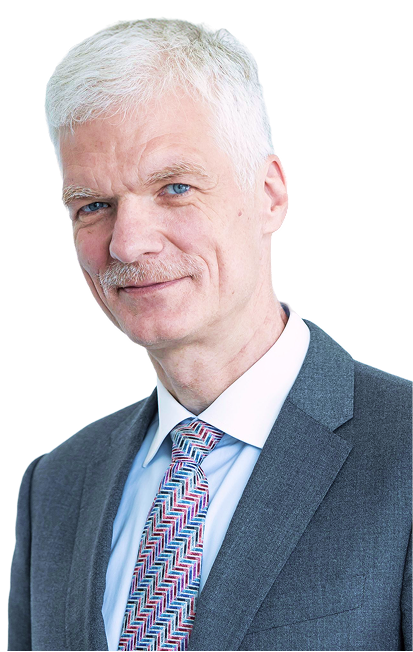
DIRECTOR FOR EDUCATION AND SKILLS, OECD
Initiator and Global Leader of PISA TEST
THE FUTURE OF WORK: WHEN EDUCATION BECOMES A BUSINESS PRIORITY

VICE PRESIDENT OF HR TRANSFORMATION, DIGITAL & AI, AIRBUS
AI TRANSFORMATION: FROM TECHNOLOGY TO BUSINESS VALUE
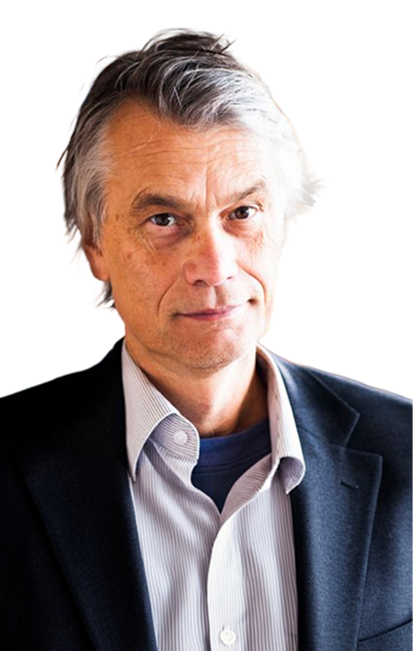
PROFESSOR OF ORGANISATION STUDIES, LUND UNIVERSITY, SWEDEN
AUTHOR OF RETURN TO JUDGEMENT AND ANTI STUPIDITY
ORGANISATIONAL SLUDGE & FUNCTIONAL STUPIDITY: ANTI STUPIDITY AS A KEY MANAGERIAL TASK

MANAGING DIRECTOR, NEXOID
CORPORATE GOVERNANCE & CULTURE RISK: DETECTING TOXIC BEHAVIOURS IN MODERN ORGANISATIONS
If you want to always be among the first to know everything about our events